Multilingual Foundation
Breaking the cycle of structural
poverty from early childhood
Multilingual Foundation
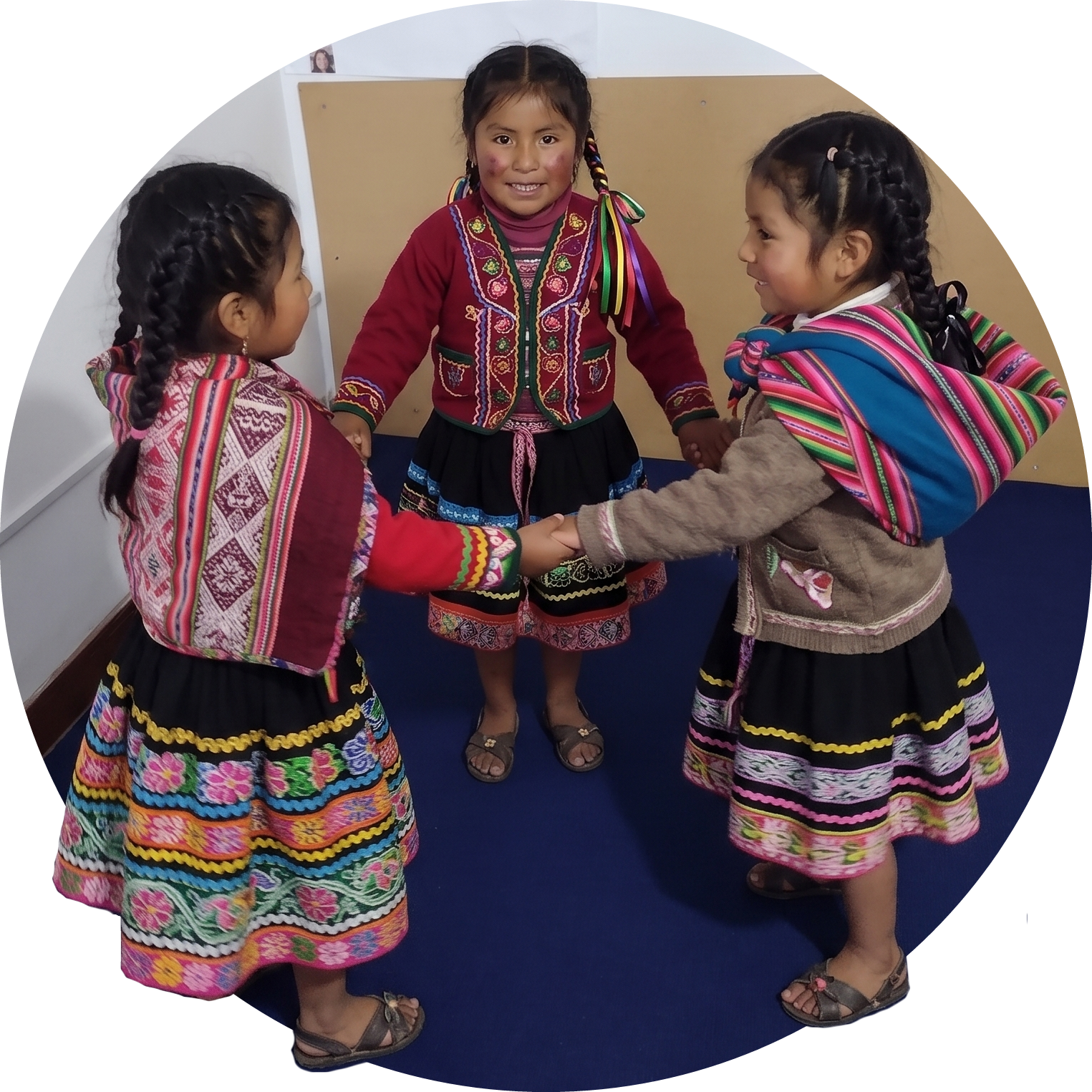
Multilingual School is a 100% Peruvian educational initiative that fights structural poverty in the Andes through a systemic early-childhood intervention.
For the first time, our model brings together child nutrition, high-quality education with international standards, language immersion in English, Quechua, and Spanish, and the building of social capital across all social groups, so that meritocracy and global opportunities can finally become a reality for Andean children.
53.8% of children under age 3 in Cusco suffer from childhood anemia (ENDES 2024). In high-Andean rural areas, this figure exceeds 65%.
More than 70% of rural students in Peru do not reach satisfactory levels in reading comprehension (MINEDU 2023).
Only 20% of children born in Peru’s poorest households manage to surpass their parents’ level of schooling, keeping the inequality trap alive (OECD Social Mobility Report 2024).
Our Work
We believe education is the most powerful tool for breaking intergenerational cycles of poverty. Our proposal integrates four simultaneous areas of intervention that begin at age two, during the critical windows of neurodevelopment, and operate across high-Andean communities, urban middle-class sectors, and higher-income families.
Child neurodevelopment
During the first five years, 90% of brain connections are formed. Childhood anemia interrupts this process, and the neurological damage can last into adulthood, even after the anemia is corrected.
2/3 of children affected
Two out of every three children in Cusco’s high-Andean communities suffer from anemia during early childhood. They begin life with a weakened brain even before entering the education system.
A human right
A healthy brain, quality education, and global opportunities are not privileges: they are fundamental human rights. Without them, the real freedom to choose a life of value is severely restricted (Sen, 1999).
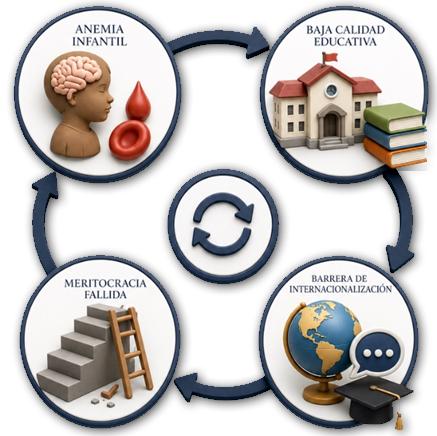
Read more about the 4 pillars of the poverty trap in the Andes.
1. Childhood anemia:
53.8% of children under age 3 in Cusco have anemia. The neurological damage it causes – including weaker brain development and executive functions – is partially irreversible after age five.
2. Low educational quality
With only 4 to 4.5 hours of class per day, the Peruvian system does not have enough time to develop the five domains of early learning. As a result, key psychomotor, socio-emotional, and scientific skills that are essential for school success are often left behind.
3. Failed meritocracy
In Peru, 70% of social mobility is determined by family background. Only 1 in 5 rural youth accesses higher education, while ethnic and territorial discrimination continues to close doors.
4. Global opportunity barrier
Without English, information, guidance, and networks, international scholarships and global academic opportunities remain out of reach for many talented children and young people.
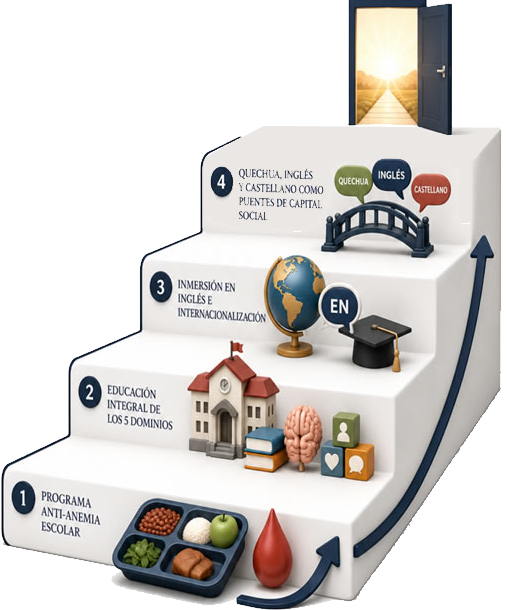
The Multilingual School Model
Axis 1: Anti-Anemia Nutrition from Early Childhood
We prevent irreversible neurological damage through enriched meals and ongoing follow-up during the critical windows of brain development.
Axis 2: Education with High International Standards
An extended school day and an integral curriculum develop all dimensions of learning at the same time: cognitive, socio-emotional, motor, and linguistic.
Axis 3: Trilingual Immersion and Preparation for Internationalization
English is used as a working language from age two, together with guidance for scholarships and global academic opportunities.
Axis 4: Bridge Languages to Build Social Capital
Quechua, English, and Spanish are shared across all social groups as tools for equity, cultural prestige, and opportunity networks.
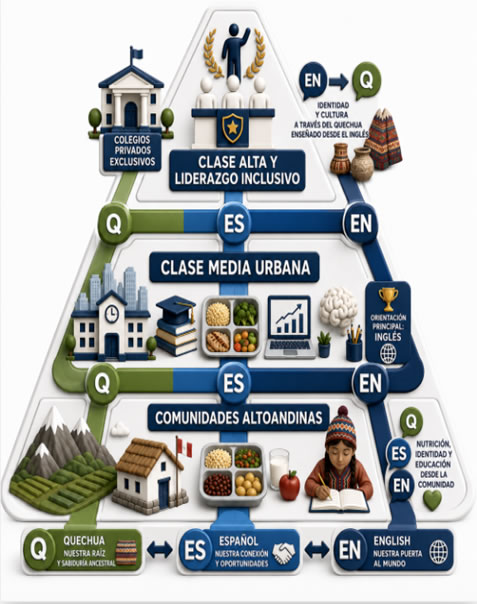
A Cross-Social Strategy Across the Entire Social Pyramid
Higher-income families and inclusive leadership development
Children with strong social capital learn Quechua, develop structural empathy, and grow as future leaders with a commitment to the region.
Urban middle class
Schools with international pedagogical standards, an extended school day, and an integral curriculum, accessible to middle-class families.
High-Andean communities
High-quality trilingual education with complete school nutrition in places where anemia exceeds 60% and schools are often multigrade.
Sustainable Development Goals (SDGs 1, 2, 4, 10)
Quality education in early childhood is key to economic growth, equality, and participation in society. Through our work, we mainly contribute to the following SDGs:

SDG 1 - No Poverty: We break the cycle of poverty by addressing its structural causes from early childhood.
SDG 2 - Zero Hunger: Anti-anemia nutrition during the critical windows of neurodevelopment.
SDG 4 - Quality Education: An international educational model that develops the five domains of early learning in an integral way.
SDG 10 - Reduced Inequalities: Bridges between social groups through shared languages and social capital from childhood.
Our Partners
Join our network of partners and help us break the cycle of poverty at its root by providing nutrition, education, and opportunities for every child.