
The 4 Pillars
The 4 Pillars of the Poverty Trap in the Andes
The 4 Pillars
Read more about the 4 pillars of the poverty trap in the Andes.
1. Childhood Anemia: The Silent Disease
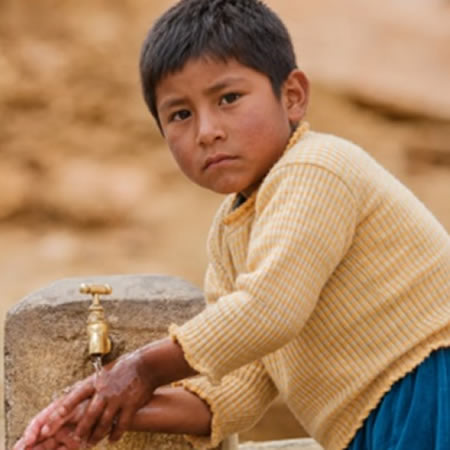
Iron-deficiency anemia affects 53.8% of children under age three in Cusco. Iron is essential to carry oxygen to the brain, myelinate neuronal axons, and synthesize neurotransmitters such as dopamine. Longitudinal studies show that children who suffered anemia in early childhood had, 25 years later, lower cerebral white-matter volume, weaker executive-function performance, and lower educational attainment (Lozoff et al., 2013). The neurological damage is partially irreversible after age five.
2. Low Educational Quality: When School Amplifies Disadvantage
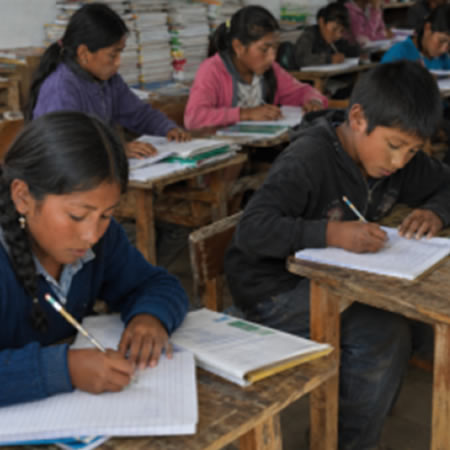
The Peruvian education system – both rural and urban middle class – operates with short school days of 4 to 4.5 hours, which is not enough time to develop the five domains of early learning: Approaches to Learning; Social and Emotional Development; Language and Literacy; Cognition; and Perceptual, Motor, and Physical Development (Head Start ELOF Framework, 2015). Under pressure to show results, most institutions focus on reading, writing, and mathematics, while psychomotor, socio-emotional, and scientific development are pushed aside. The result is that many children enter primary school without the executive functions, fine motor skills, and socio-emotional skills they need in order to learn.
3. The Internationalization Barrier: English and Global Disconnection
More than 80% of international scholarships require certified intermediate or advanced English (TOEFL, IELTS). However, less than 5% of students in rural public schools reach a functional level of English by the end of secondary school (MINEDU). This is compounded by a lack of information about scholarships, no guidance on how to apply, and limited networks that could help students access international opportunities. For a young person from a high-Andean community, studying abroad is often not seen as a real goal; it feels like an unreachable dream.

4. Failed Meritocracy: Effort Without Social Capital
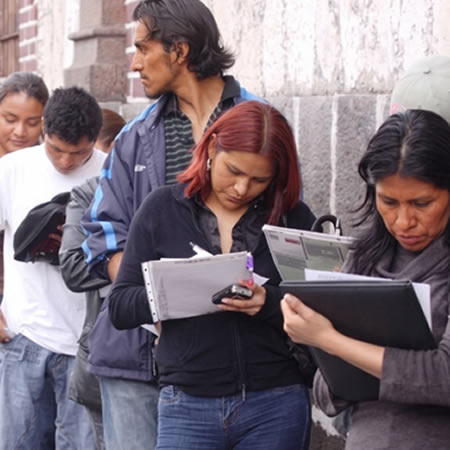
According to the World Bank and the OECD, more than 70% of social mobility in Peru is determined by family background. Only 1 in 5 rural youth accesses higher education. Ethnic-racial and territorial discrimination, documented by Peru’s Ministry of Culture and the Ombudsman’s Office, means that last name, accent, and place of origin continue to be barriers to formal employment and positions of power. Meritocracy, without real equality of conditions, becomes a narrative that blames the victim for their own exclusion.