Our Solution
The Multilingual School Model
Model
Multilingual School
Axis 1: School Anti-Anemia Program
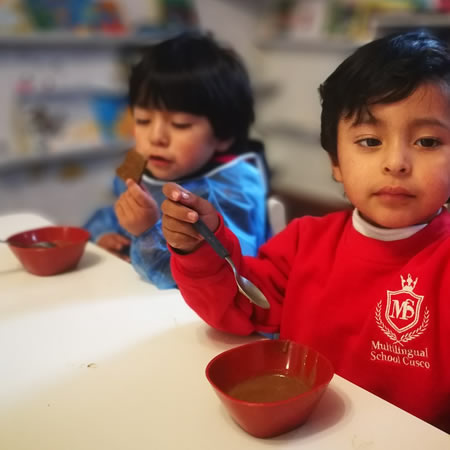
We implement a nutrition program with iron-rich snacks, balanced lunches with highly bioavailable proteins, and ongoing nutritional follow-up. Prevention begins in the first months of life and continues throughout early childhood, covering the critical windows of myelination and synaptogenesis. Without healthy brains, real learning is not possible.
Axis 2: Education with High International Standards
In response to Peru’s 4 to 4.5 hour school days – which are not enough for integral development – we implement an extended school day of at least 6 hours, the minimum needed to reach the standards of the world’s highest-performing education systems. Our curriculum develops executive functions, socio-emotional skills, language and literacy in three languages, mathematical thinking, scientific reasoning, and psychomotor development at the same time. None of these areas can be postponed without consequences.
Axis 3: English Immersion from Age Two and Preparation for Internationalization
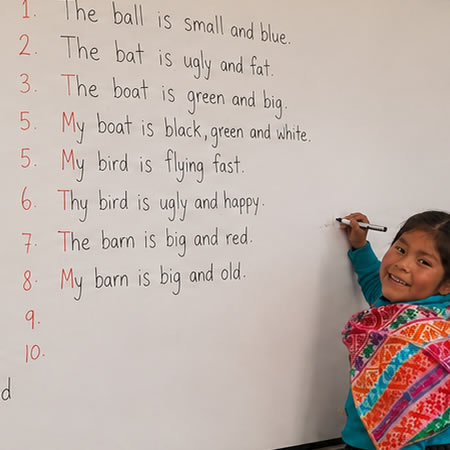
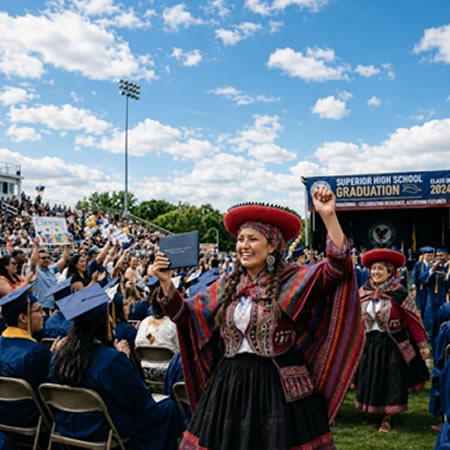
Language immersion begins at age two, taking advantage of the brain’s strongest period for phonological acquisition. Children grow as natural bilingual or trilingual learners (English, Spanish, and Quechua). Later, from middle childhood, we add international career guidance, preparation for standardized exams, and the development of competitive profiles for global scholarships. English is not taught as a subject: it is lived as a working language.
Axis 4: Quechua, English, and Spanish as Bridges of Social Capital
Quechua-speaking children learn English from their natural bilingual foundation. Urban and higher-income children learn Quechua. Quechua regains prestige as an academic and cultural asset. Children from all social groups share classrooms, methodologies, and languages, building bonds that can later become networks of opportunity. We do not isolate the poor: we connect the whole society.