
About Us
Multilingual Foundation Cusco
OUR STORY
Multilingual Foundation Cusco
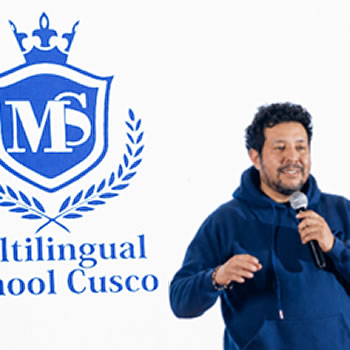
Multilingual Foundation was not born as a school. It was born from a question that stayed with us for years:
Why do so many development projects fail when outside support leaves?
For more than 25 years, Boris Santos worked in economic development, entrepreneurship, community-based tourism, production, education, and social strengthening projects with national and international organizations, including the United Nations, the United Nations Development Programme, the Red Cross, and other cooperation agencies.
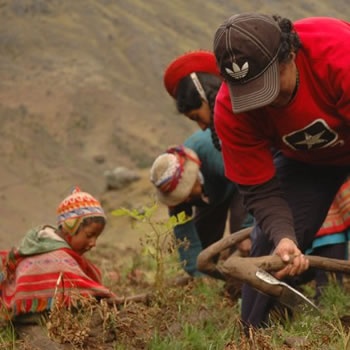
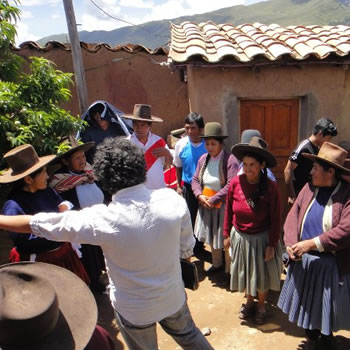
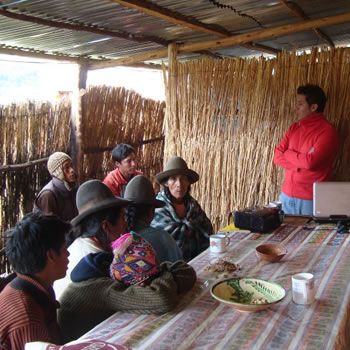
Along the way, working with Andean communities became a deep part of his life. This was not desk work. It was field work: in farms, workshops, community meetings, training sessions, fairs, tourism routes, producer associations, and entrepreneurship projects. These were years of listening, walking alongside families, and trying to build opportunities in places where, historically, only promises had arrived.
For a long time, it seemed that the projects were working. Plans were designed. Associations were organized. Production processes were taught. Families were trained. Businesses were supported. Business models were built. In many cases, the work lasted two or three years. Communities learned the steps, repeated the procedures, improved their production, and started to see results.
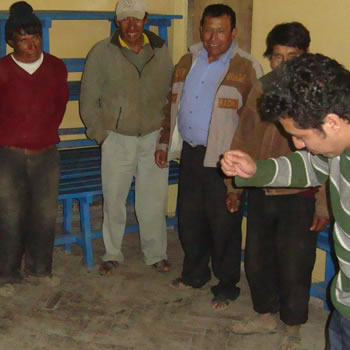
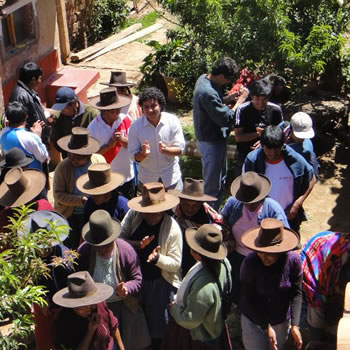
But then something happened again and again.
When the technical team, the facilitator, or the support organization left, most projects weakened very quickly. In many cases, in less than six months, the progress collapsed. Not because there had been no work. Not because people were not good. Not because there was no effort. On the contrary: people had worked intensely for years.
That repeated pattern forced us to look deeper.
We realized that the problem was not only a lack of money, tools, or training. There was something more structural. Something that began long before adulthood. Something connected to how people had grown, learned, thought, and built confidence in themselves.
We began to understand that many people could follow instructions with great responsibility, but had serious difficulty taking leadership, taking risks, changing processes, innovating, or sustaining their own decisions once outside support disappeared. They were excellent at following a path already drawn for them, but the system had never given them the conditions to become creators of new paths.
That discovery was painful, but it also gave us clarity.
We understood that if we truly wanted to transform a community, it was not enough to intervene when people were already adults. We had to begin much earlier. We had to look at early childhood.
That is when one of the hardest answers appeared: childhood anemia.
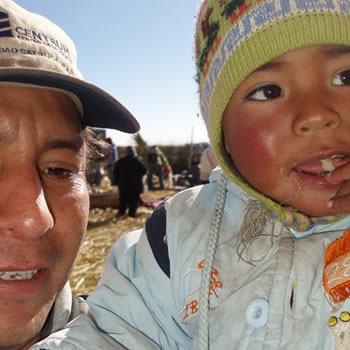
In many Andean communities, a large number of children grow up with anemia during the most important years of brain development. This silent condition can limit attention, memory, understanding, language, self-regulation, and analytical thinking. When this happens between birth and age five, the damage can follow the child throughout school and adult life.
Then we understood something essential:
We cannot ask for critical thinking from a brain that was not nourished on time.
We cannot demand leadership from a person who was never given the chance to build confidence.
We cannot speak about meritocracy when children do not start from the same place.
We cannot expect sustainable development if intervention begins too late.
Alongside this reality, there were other equally deep problems: low-quality education, few real opportunities for internationalization, the absence of English in childhood, historical discrimination, low collective self-esteem, and a fragmented society where children from different social backgrounds rarely see one another as equals.
This is how Multilingual Foundation was born.
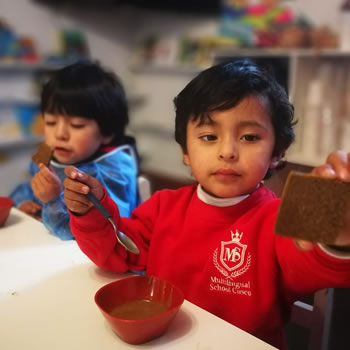
On December 8, 2018, with the conviction that change must begin in the first years of life, Multilingual School Cusco was founded. It was created to prove that it is possible to raise children with critical thinking, self-esteem, health, cultural identity, and access to global opportunities from early childhood. It became a key part of Multilingual Foundation.
Our model begins with a simple but powerful idea: if we want to change the future of a community, we must protect and develop children’s brains from the very beginning.
That is why Multilingual School is not only a bilingual school. It is an educational and social laboratory built around four essential fronts:
1. Nutrition and the fight against childhood anemia
Because a child needs a strong brain in order to learn, create, and make decisions.
2. High-quality education with international standards
Because going to school is not enough. Children must understand, reason, express themselves, and solve problems.
3. English immersion from age two
Because English opens doors, and because early bilingualism strengthens cognitive development and prepares children for a global world.
4. Social and cultural connection across different social groups
Because talent needs networks, role models, and human connections in order to become real opportunity.
Over time, we also discovered that the project could not remain only in English. In a region like Cusco, Quechua could not be treated as a memory of the past. It had to be honored as a living language of identity, pride, and connection.
Con el tiempo, descubrimos también que el proyecto no debía quedarse solo en el inglés. En una región como Cusco, el quechua no podía ser tratado como un recuerdo del pasado, sino como una herramienta viva de identidad, orgullo y conexión.
Por eso comenzamos a desarrollar un sistema propio de enseñanza del quechua para niños que nunca tuvieron contacto con este idioma, usando cuentos, canciones, historietas y personajes. Nuestro sueño es que el inglés y el quechua se conviertan en puentes: el inglés para abrir el mundo, y el quechua para reconciliarnos con nuestras raíces.
Multilingual Foundation busca trabajar en toda la pirámide social. No creemos que el desarrollo se logre separando a los niños por origen, ingreso o apellido. Creemos que el Perú necesita espacios donde los niños de comunidades andinas, familias de clase media y familias con mayores oportunidades puedan compartir valores, lenguajes, historias y sueños comunes.
Porque una sociedad fragmentada no puede construir futuro.
Nuestra primera etapa ha sido demostrar que este modelo funciona en Cusco. Que niños desde los 2 años pueden vivir una inmersión real en inglés. Que pueden aprender jugando. Que pueden desarrollar independencia, autoestima, pensamiento lógico y habilidades sociales. Que las familias pueden involucrarse. Que la educación puede ser exigente sin dejar de ser humana.
Pero nuestro propósito final va más allá de nuestras aulas.
Queremos llevar este modelo a comunidades altoandinas, adaptarlo a sus realidades, fortalecer la nutrición de los niños, complementar su educación, potenciar su bilingüismo natural en quechua y español, y abrirles una nueva puerta con el inglés.
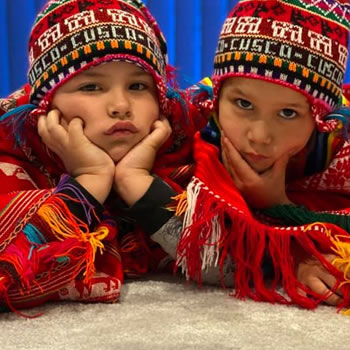
No buscamos entregar regalos. Buscamos construir capacidades.
No buscamos crear dependencia. Buscamos formar autonomía.
No buscamos que los niños abandonen su identidad. Buscamos que se sientan orgullosos de ella y, desde allí, puedan mirar al mundo sin miedo.
Multilingual Foundation nació de años de trabajo, de frustraciones, de preguntas difíciles y de una certeza profunda: los pueblos no son pobres por falta de talento. Muchas veces son pobres porque el sistema llegó tarde, alimentó mal, educó poco, discriminó mucho y luego llamó “falta de mérito” a lo que en realidad fue falta de oportunidad.
Nuestra historia es la historia de una respuesta.
Una respuesta desde Cusco.
Una respuesta desde la infancia.
Una respuesta desde la educación, la nutrición, los idiomas y la dignidad.
Hoy seguimos construyendo este camino con la misma convicción con la que empezamos: si formamos niños sanos, seguros, bilingües, orgullosos de su cultura y conectados con el mundo, podremos transformar no solo sus vidas, sino también la historia de sus comunidades.
Multilingual Foundation
Formando a los verdaderos líderes del futuro.
Raising the right leaders of tomorrow.